The Catalan industry, protagonist of the path towards a zero-emission environment

The Catalan industry, protagonist of the path towards a zero-emission environment
The Catalan industry, protagonist of the path towards a zero-emission environment
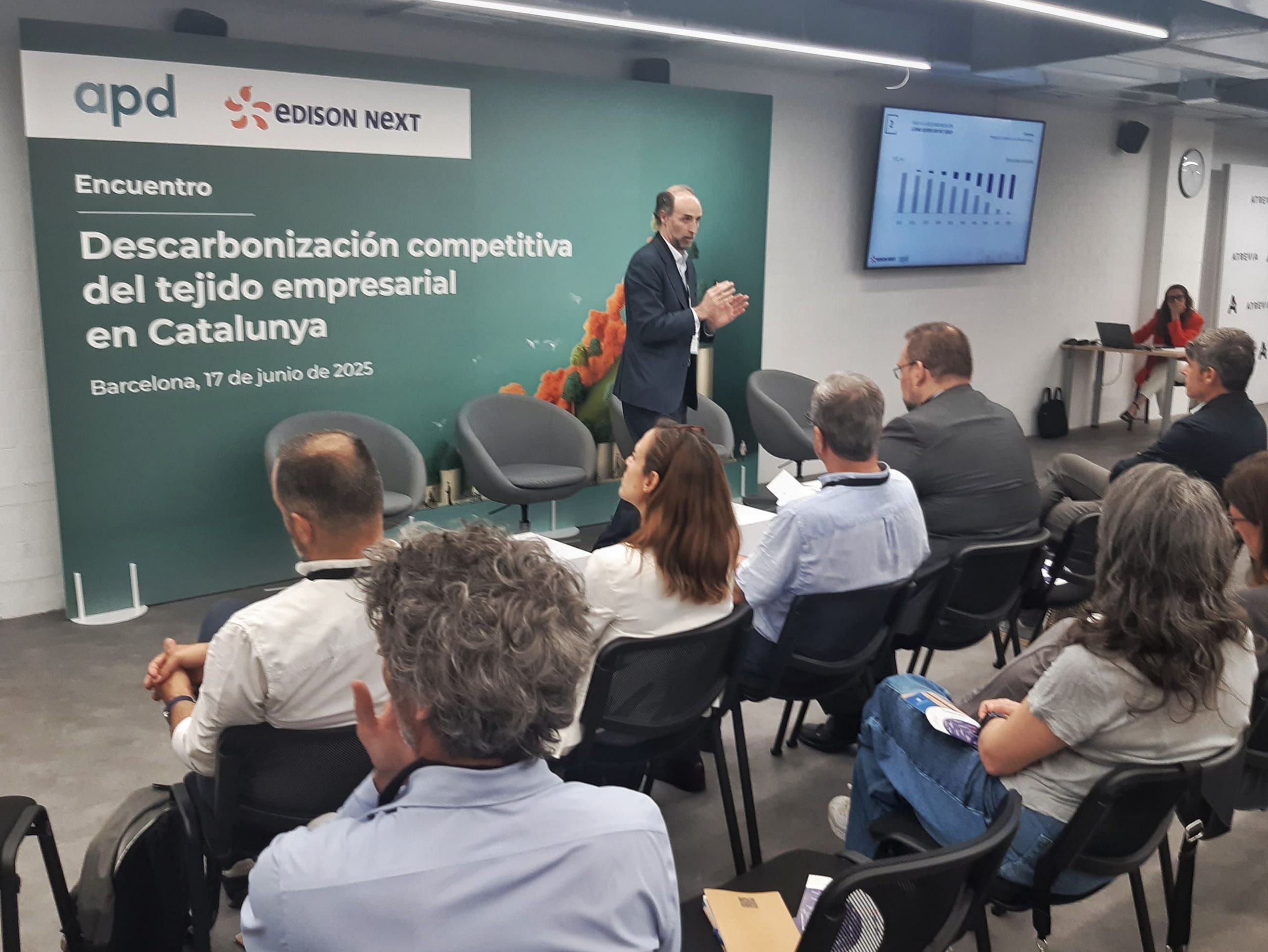
At a key moment for progress toward a low-carbon economy, Edison Next, together with the Association for the Progress of Management (APD), co-organized the executive forum "Competitive decarbonization of the business fabric in Catalonia," a meeting held this morning in Barcelona that brought together institutional representatives, industry leaders, and sustainability experts to discuss the challenges and opportunities of the energy transition in the region.
The event was inaugurated by Isabel Grifoll, APD Catalonia Zone Advisor, and Íñigo Bertrand, CEO of Edison Next Spain. In his opening remarks, Bertrand highlighted that "Catalonia is in a privileged position to lead the industrial transformation toward more sustainable models, but we will only achieve this if we drive decarbonization that, in addition to being effective, is competitive for companies."
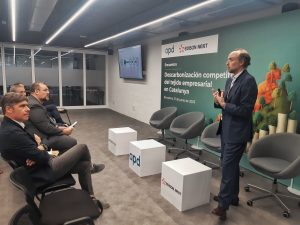
Next, the CEO of Edison Next gave a brief presentation on the Net Zero challenge, sharing the company's vision on how businesses can tackle their roadmap to net-zero emissions by combining efficiency, technology, and innovation.
The forum continued with a roundtable moderated by Iñaki Gili, Head of Strategic Projects at the Catalan Office for Climate Change of the Government of Catalonia. Participants included Íñigo Bertrand, CEO of Edison Next Spain; Jordi Aguilera, Sales Engineer at the company; Carla Fos, Corporate Sustainability Manager at Cementos Molins; and Xavier Navarrez, Industrial Project Director at Alstom. During the discussion, the speakers shared their experiences in decarbonization projects, as well as key lessons learned and concrete strategies to accelerate the energy transition in key industrial sectors.
Alstom is one of the companies that, together with Edison Next Spain, is currently developing some of the most significant decarbonization projects in Catalonia. At its industrial center in Santa Perpètua de Mogoda, one of the group's most important in Europe, the first phase of photovoltaic installation for self-consumption has already been completed, and a comprehensive switch to LED lighting has been carried out.
When the second and final phase of this project is completed, the plant will have more than 9,000 square meters of solar panels, which will generate 26.5% of the energy consumed by the factory. This action is a clear reflection of the real impact that public-private collaboration can have on the energy transition of the Catalan business fabric.
Decarbonization has become an urgent and strategic necessity. Especially in territories with a strong industrial presence, such as Catalonia, where moving toward a cleaner, more efficient, and competitive economic model is key to ensuring long-term sustainable growth. The transformation is already underway, but it will require active involvement and a greater commitment from all actors, from institutions to companies.
In the current Catalan context, meetings like the one organized by APD and Edison Next take on special relevance. They serve as a meeting place to share knowledge, align visions, and establish alliances that accelerate the decarbonization process without compromising productivity or industrial development. The Catalan business fabric has the capacity, and the responsibility, to lead this change.