
To understand the origin of ethical investments, we have to go back more than fifty years, specifically to the time of the Vietnam War. This armed conflict sparked a wave of university protests across the United States demanding an end to educational institutions'...
6 de May de 2026
Categorías: Blog
Energy solutions for the agri-food industry: efficiency and operational stability
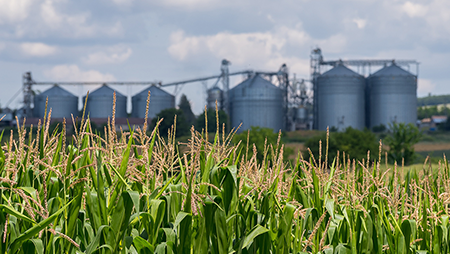
The Spanish agri-food industry is one of the pillars of the national productive fabric. With a strong territorial presence, a high level of exports, and growing demands in terms of sustainability and traceability, the sector faces a scenario in which energy has become a critical factor for its competitiveness.
Unlike other industrial fields, the agri-food sector works with perishable raw materials and continuous processes that depend on very precise thermal conditions. The cold chain, steam generation, cooking, drying or pasteurization processes, and the climate control of production facilities require a stable and reliable energy supply. For all these reasons, for this sector, energy is a factor that directly affects quality assurance, food safety, and production continuity.
Energy efficiency remains one of the most decisive energy aspects for this sector, especially in a situation like the current one, marked by price volatility. However, from our point of view, talking about efficiency in the agri-food industry should imply going beyond a one-off reduction in consumption.
It involves analyzing in depth how energy behaves within each production process of each client, identifying possible thermal losses, optimizing the performance of equipment with room for improvement, and adapting solutions to the operational reality of each plant.
At Edison Next, we support companies in the agri-food sector through advanced energy audits and various detailed analyses of energy flows, which allow us to detect structural inefficiencies and design improvement plans aligned with each client’s objectives.
Optimizing industrial refrigeration systems, installing BMS systems in plants, recovering heat in thermal processes, or implementing cogeneration systems are some of the solutions that allow us to improve the energy performance of our clients.
However, in the agri-food field, it is important that before talking about savings, we talk about operational stability. An unplanned shutdown, a temperature deviation, or an electrical failure can lead to product losses, interruptions in the cold chain, or health risks. Ensuring energy continuity is, therefore, a strategic priority, and at Edison Next we are very aware of this.
To respond to this challenge, we design and implement solutions that reinforce the reliability of the energy supply, integrating backup systems, predictive maintenance, and preventive management of critical facilities. The combination of our on-site generation solutions, such as photovoltaic self-consumption installations or solutions based on biomethane, together with energy management and comprehensive operation contracts, makes it possible to reduce external dependence and improve the resilience of production plants.
Control is the third essential pillar. Energy digitalization has transformed the way energy is managed in the agri-food sector. Through real-time monitoring systems and energy management platforms, it is possible to anticipate deviations, optimize equipment operation, and adjust consumption based on production activity. This capacity for anticipation, in addition to improving efficiency, protects the stability of the process and helps maintain the quality standards demanded by the market.
Furthermore, the integration of renewable and circular economy solutions, such as the use of organic waste for the production of biogas or biomethane, opens new opportunities for agri-food companies seeking to advance their sustainability commitments and reduce their carbon footprint without altering their production model.
In any sector, but even more so in one like agri-food, it is not about implementing isolated technologies, but about building a robust energy model that combines renewable generation, process optimization, advanced control, and supply guarantee.
At Edison Next, we have been working alongside the Spanish agri-food sector for years with this approach. We accompany companies from the initial analysis to the implementation, operation, and continuous improvement of their energy systems, integrating efficiency, stability, and control into a strategy consistent with their production and sustainability objectives.
Contact Us
Edison
Next
Information on the processing of your personal data in accordance with the provisions of the General Regulation (EU) 2016/679, on data protection (RGPD) and the L.O. 3/2018, on data protection and guarantee of digital rights (LOPDGDD).
Company Name: EDISON NEXT SPAIN, S.L.U.
Purpose: To respond to your queries and requests.
Legitimacy: Consent expressed by the sender when sending the data via the form provided for this sole purpose.
Rights: You may at any time exercise your right to access, rectification, deletion and portability of the personal data processed by Edison Next, as well as to oppose and limit such processing, by sending a signed request with proof of identity to privacidad@edison.es
Additional information: You can read more detailed information and other additional information in our privacy policy: www.edisonnext.es
