
To understand the origin of ethical investments, we have to go back more than fifty years, specifically to the time of the Vietnam War. This armed conflict sparked a wave of university protests across the United States demanding an end to educational institutions'...
6 de May de 2026
Categorías: Blog
Spanish industry and biomethane, a strategic alliance to boost its competitiveness
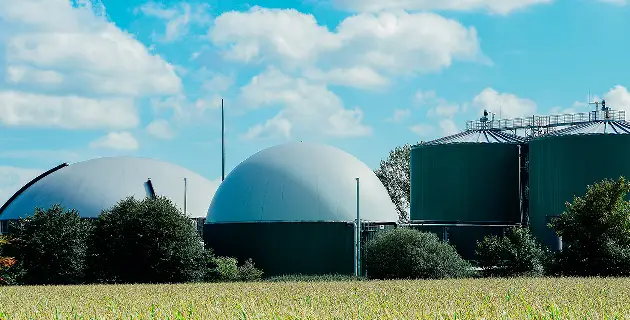
Spanish industry is going through a decisive stage. The volatility of energy prices, decarbonization commitments, and the need to strengthen national energy autonomy have made energy management a central issue for business competitiveness. Faced with these challenges, biomethane has emerged as one of the solutions with the greatest potential for the Spanish productive fabric.
Biomethane represents a smart way to convert organic waste, such as livestock manure, agri-food by-products, or sewage sludge, into a green gas with characteristics equivalent to conventional natural gas, but with a renewable origin and a notably more favorable emissions balance.
Furthermore, thanks to its compatibility with natural gas, biomethane can be injected into the existing grid and used in the same industrial facilities without needing to modify equipment or processes. This ability to integrate into existing infrastructure makes it a particularly attractive solution for companies seeking to advance their decarbonization without compromising operational continuity.
For Spanish industry, this compatibility represents a major advantage. Key sectors in our country, such as agri-food, metallurgy, chemicals, and paper, rely heavily on gas to generate heat, steam, or energy in their processes. For these industries, biomethane offers the possibility of progressively replacing fossil gas without compromising operational continuity, maintaining process stability while advancing emissions reduction.
Beyond its environmental contribution, biomethane also responds to an economic and territorial logic that is especially relevant in Spain. Transforming waste into energy allows turning an abundant environmental liability in our country into an energy asset, reinforcing the principles of the circular economy and generating new opportunities in rural and industrial settings.
In a country like ours, with strong livestock and agro-industrial activity, developing new biomethane projects would help manage organic surpluses, reduce emissions, and create local value chains linked to energy production. From a business perspective, incorporating new biomethane projects into the national energy mix would provide stability amid the uncertainty of international fossil fuel markets, while also improving companies’ reputational perception among customers, investors, and administrations.
Spain also has a biomethane production potential that is yet to be developed. The combination of abundant available resources, consolidated gas infrastructure, and a regulatory framework that promotes renewable energies places our country in a favorable position to accelerate its implementation in the coming years.
At Edison Next, we have been integrating renewable energy solutions into the Spanish industrial model for years with a long-term vision. The recent acquisition from Iberdrola of its gas plants for slurry treatment is just one more example of our commitment to the development of biomethane in Spain.
Through a comprehensive approach that combines renewable generation, efficiency, continuity, and energy control, we accompany companies and industries in transforming their energy model to turn the transition into a real opportunity for competitiveness and sustainable growth.
Contact Us
Edison
Next
Information on the processing of your personal data in accordance with the provisions of the General Regulation (EU) 2016/679, on data protection (RGPD) and the L.O. 3/2018, on data protection and guarantee of digital rights (LOPDGDD).
Company Name: EDISON NEXT SPAIN, S.L.U.
Purpose: To respond to your queries and requests.
Legitimacy: Consent expressed by the sender when sending the data via the form provided for this sole purpose.
Rights: You may at any time exercise your right to access, rectification, deletion and portability of the personal data processed by Edison Next, as well as to oppose and limit such processing, by sending a signed request with proof of identity to privacidad@edison.es
Additional information: You can read more detailed information and other additional information in our privacy policy: www.edisonnext.es
