
Edison Next Spain, a subsidiary of the EDISON energy group and the French giant EDF, has been awarded a project promoted by the Regional Government of Andalusia to deploy energy self-consumption and sustainable mobility solutions in the province of Almería. The...
4 de May de 2026
Hybridization of energy solutions: why a single technology is no longer enough
For years, many companies’ energy strategies have relied on a single solution, such as a more efficient boiler, a photovoltaic installation, or an upgraded HVAC system. However, the current energy context has completely changed.
Factors such as price volatility, increasing electrification, the integration of renewable energies, and the emergence of new flexibility markets have transformed the way organizations must manage their energy if they truly want to turn it into a competitive advantage.
Betting on a single technology is no longer enough to achieve the levels of efficiency, resilience, and competitiveness that the environment demands. Today, true value lies in the ability to intelligently combine different solutions, creating hybrid systems that dynamically adapt to the needs of each moment.
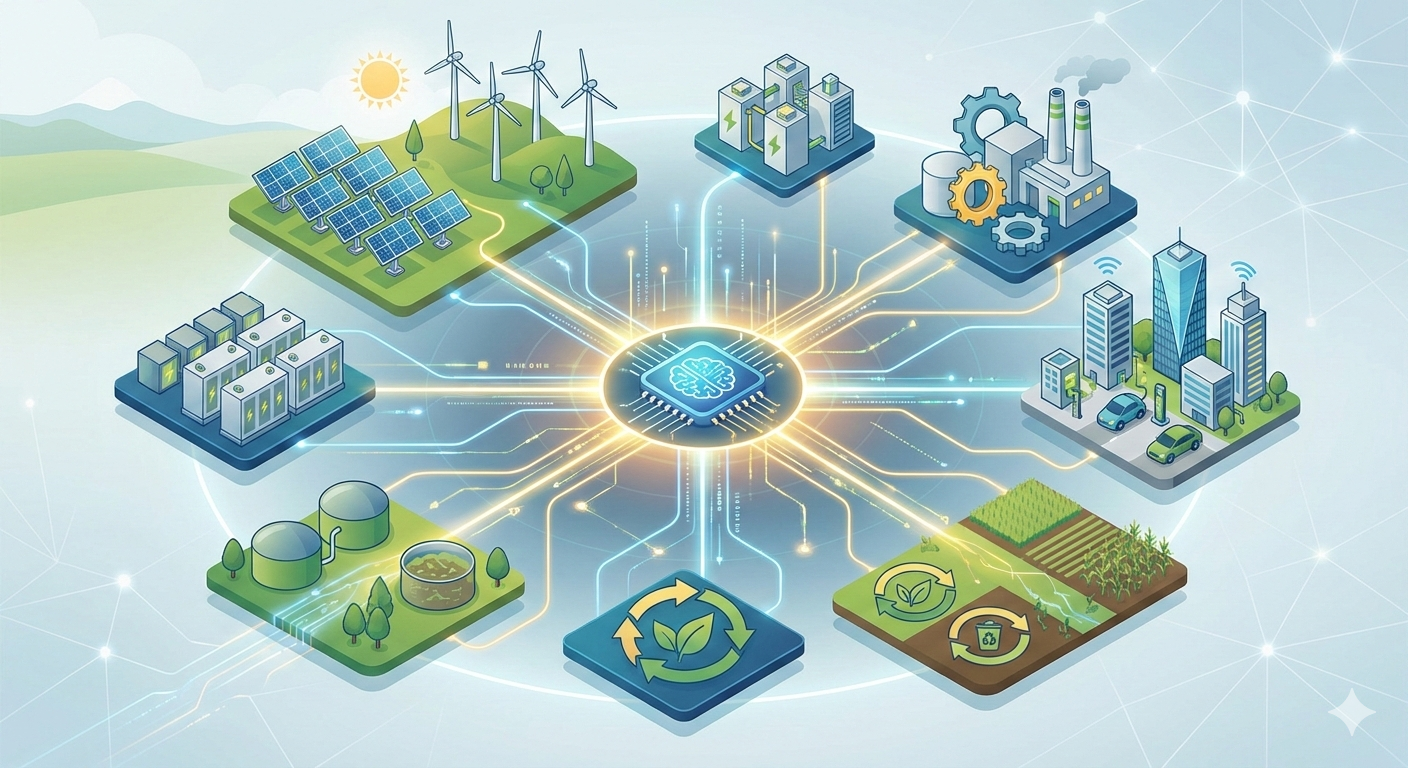
Energy hybridization consists precisely of integrating different technologies such as renewable generation, storage, electrification, heat recovery, or advanced management systems to optimize the overall performance of a facility. It is not just about adding solutions, but about making them work in a coordinated way to multiply their advantages.
One of the clearest examples is the combination of photovoltaic self-consumption with battery storage. While solar generation solutions reduce dependence on the grid, storage solutions add flexibility, allowing for shifting consumption, avoiding demand peaks, or better utilizing surpluses. If an Energy Management System (EMS) is incorporated, facilities can make real-time decisions based on prices, forecasts, and operational needs.
But hybridization goes beyond the electrical realm. In the thermal field, combining technologies such as heat pumps, electric boilers, biomass, or thermal storage systems allows for meeting demand more efficiently and with lower carbon emissions. Furthermore, integration with industrial processes or waste heat recovery opens up new opportunities to reduce consumption and emissions without compromising operations.
This hybrid approach also provides a key advantage: resilience. Having multiple sources and technologies allows companies and industries to better adapt to changes in the environment, whether regulatory, economic, or operational. Compared to more rigid models, hybrid solutions offer greater responsiveness and service continuity.
In parallel, the evolution of the regulatory framework and the emergence of new players, such as the independent aggregator, are making it easier for these hybrid installations to participate in flexibility markets. This means that, in addition to optimizing their consumption, they can generate additional income by making their assets available to the electrical system.
Ultimately, the energy transition is not about betting on a single solution, but about designing intelligent energy ecosystems capable of integrating different solutions and continuously adapting. In this way, energy ceases to be a static element and becomes a dynamic system, where the right combination of technologies is the key to maximizing value.
At Edison Next, we have been accompanying companies in this transformation process for years, designing and implementing hybrid energy solutions tailored to each reality. We integrate renewable generation, storage, electrification, and advanced management systems to optimize the energy and economic performance of facilities. Because in the new energy model, the true competitive advantage lies not in implementing a single technology, but in how all of them are combined.
Contact Us
Edison
Next
Information on the processing of your personal data in accordance with the provisions of the General Regulation (EU) 2016/679, on data protection (RGPD) and the L.O. 3/2018, on data protection and guarantee of digital rights (LOPDGDD).
Company Name: EDISON NEXT SPAIN, S.L.U.
Purpose: To respond to your queries and requests.
Legitimacy: Consent expressed by the sender when sending the data via the form provided for this sole purpose.
Rights: You may at any time exercise your right to access, rectification, deletion and portability of the personal data processed by Edison Next, as well as to oppose and limit such processing, by sending a signed request with proof of identity to privacidad@edison.es
Additional information: You can read more detailed information and other additional information in our privacy policy: www.edisonnext.es
