
Edison Next Spain, a subsidiary of the EDISON energy group and the French giant EDF, has been awarded a project promoted by the Regional Government of Andalusia to deploy energy self-consumption and sustainable mobility solutions in the province of Almería. The...
5 de September de 2025
Greenwashing, the invisible enemy of the energy transition
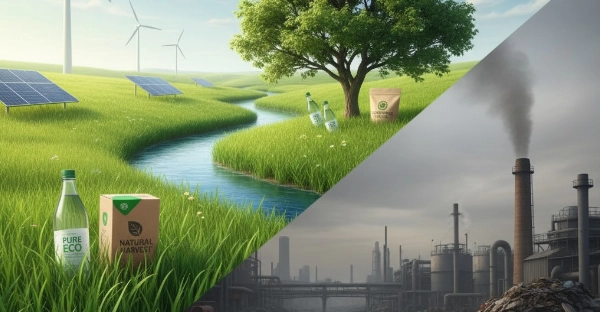
We live in a time when everything seems urgent: climate change, the energy transition, the need to act. And, amid that urgency, sustainability has become an omnipresent word. It appears in corporate speeches, advertising campaigns, and annual reports. But what happens when that sustainability remains only on the surface?
Greenwashing is precisely that: pretending to be sustainable without actually being so. It is a strategy used by some organizations to project an environmentally friendly image without making real changes. But why is it dangerous?
Greenwashing is not a simple communication error. It is a distortion that confuses citizens, slows collective progress, and undermines the credibility of those who are genuinely doing things right. It takes many forms: promises without timelines, commitments without traceability, green logos on products that are not green. In short, statements that sound good but do not hold up under close scrutiny.
At Edison Next, we do not believe in magic shortcuts. Sustainability is not improvised or painted green; it is built from within with technical work, precise data, and solutions that generate real impact. Our approach does not start with a campaign, but with an audit, a diagnosis, and a detailed review of consumption, processes, and real opportunities for improvement. And it continues with implementation, monitoring, and continuous measurement. Because what cannot be measured cannot be improved. And what is not improved does not transform.
Combating greenwashing requires more than good intentions. It requires a solid methodology, the ability to say “no” when a project does not add value, and the commitment to accompany each client on their roadmap with transparency, rigor, and viable solutions. At Edison Next, we have been betting for years on a sustainability that, instead of noise, seeks results. A sustainability with figures, with savings, with tons of CO₂ avoided, and with buildings, factories, or municipalities that work better than before.
At this moment, our country needs more real sustainability and fewer well-designed slogans. It needs companies that not only say what they are going to do, but actually do it. And do it well. Because, in the end, the energy transition is not won in speeches; it is won on the ground, with difficult decisions, with committed energy partners, and with solutions that truly change things.
Contact Us
Edison
Next
Information on the processing of your personal data in accordance with the provisions of the General Regulation (EU) 2016/679, on data protection (RGPD) and the L.O. 3/2018, on data protection and guarantee of digital rights (LOPDGDD).
Company Name: EDISON NEXT SPAIN, S.L.U.
Purpose: To respond to your queries and requests.
Legitimacy: Consent expressed by the sender when sending the data via the form provided for this sole purpose.
Rights: You may at any time exercise your right to access, rectification, deletion and portability of the personal data processed by Edison Next, as well as to oppose and limit such processing, by sending a signed request with proof of identity to privacidad@edison.es
Additional information: You can read more detailed information and other additional information in our privacy policy: www.edisonnext.es
