
Edison Next Spain, a subsidiary of the EDISON energy group and the French giant EDF, has been awarded a project promoted by the Regional Government of Andalusia to deploy energy self-consumption and sustainable mobility solutions in the province of Almería. The...
14 de November de 2025
Categorías: Blog
The power of the energy mix: combining solutions to multiply innovation and sustainability.
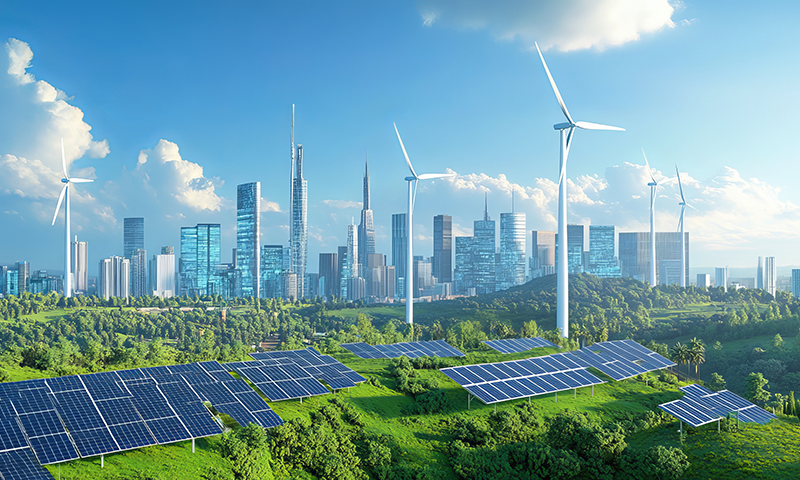
On the path towards decarbonization and energy efficiency, there is no single formula. Every company, every city, and every territory has different needs, resources, and rhythms. Our experience has shown us that the energy future is not built with a single technology, but with the intelligent combination of them. Betting on an energy mix adapted to each reality is the most effective way to move towards a more competitive, innovative, and sustainable model.
For years, the conversation about sustainability has focused on identifying “the” energy solution of the future. However, we have long since verified that the key is not in choosing one, but in integrating diverse technologies that complement each other.
Each energy solution provides specific value, but it is their integration that makes the difference. Energy efficiency is the starting point, as it optimizes consumption and reduces initial demand. Renewable energies, such as photovoltaics, biogas, or biomass, provide local and clean generation. Intelligent management systems, such as BMS systems, allow for monitoring energy flows in real-time, detecting inefficiencies, and acting predictively. Added to this is the role of energy storage and electric mobility, which provide flexibility and balance between production and consumption. Finally, circular economy solutions, such as waste heat recovery or the use of industrial water, turn waste into new resources.
When all these pieces are combined, the result is a more efficient, connected, and sustainable energy ecosystem. In addition to improving the economic performance of companies, it also generates tangible benefits for the communities in which they operate.
A well-designed energy mix has a direct impact on both business competitiveness and environmental sustainability. In the urban sphere, for example, the energy rehabilitation projects for public lighting that Edison Next has developed in cities like Madrid or Seville have reduced energy consumption by more than 60%, avoiding thousands of tons of CO₂ emissions each year.
In industrial environments, the integration of photovoltaic self-consumption systems with intelligent management solutions has achieved energy savings of up to 40%, in addition to greater cost stability and a notable reduction in the carbon footprint. Beyond the data, these results reflect a change in mindset: moving from managing energy as an expense to understanding it as a lever for innovation, sustainability, and growth.
Furthermore, the energy transition not only benefits companies but also benefits society as a whole. Every percentage point of efficiency, every kilowatt-hour of renewable energy, or every ton of CO₂ avoided contributes to building cleaner cities and more sustainable environments. At Edison Next, we firmly believe in the transformative power of energy because, when managed efficiently and responsibly, it becomes an engine of social well-being. That is why our solutions also seek to generate shared value through local employment, technological innovation, and the improvement of the urban and industrial environment.
Likewise, the success of the energy mix depends not only on technology but also on support. That is why, in our company, we put so much effort into personalizing for each client. Our commitment is to offer tailor-made strategies, capable of adapting to each context and evolving with it. Because, although no two realities are the same, we do have a common goal: to accelerate the energy transition in a fair, efficient, and lasting way.
At Edison Next, we work every day to demonstrate that the energy mix is much more than a sum of solutions; it is an integrated vision of progress, where sustainability, competitiveness, and innovation advance hand in hand. Only then will we ensure that the energy transition is not a challenge, but an opportunity for everyone.
Contact Us
Edison
Next
Information on the processing of your personal data in accordance with the provisions of the General Regulation (EU) 2016/679, on data protection (RGPD) and the L.O. 3/2018, on data protection and guarantee of digital rights (LOPDGDD).
Company Name: EDISON NEXT SPAIN, S.L.U.
Purpose: To respond to your queries and requests.
Legitimacy: Consent expressed by the sender when sending the data via the form provided for this sole purpose.
Rights: You may at any time exercise your right to access, rectification, deletion and portability of the personal data processed by Edison Next, as well as to oppose and limit such processing, by sending a signed request with proof of identity to privacidad@edison.es
Additional information: You can read more detailed information and other additional information in our privacy policy: www.edisonnext.es
