
Edison Next Spain, a subsidiary of the EDISON energy group and the French giant EDF, has been awarded a project promoted by the Regional Government of Andalusia to deploy energy self-consumption and sustainable mobility solutions in the province of Almería. The...
3 de June de 2025
Categorías: Blog
Technology and energy intelligence to move towards a more efficient pharmaceutical industry
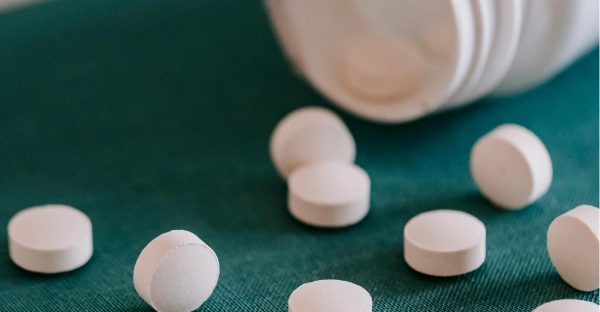
In a world where sustainability is increasingly relevant, it is essential to integrate effective measures that contribute to environmental protection. This challenge is particularly important in the pharmaceutical industry, one of the most energy-intensive industrial sectors, where efficiency directly impacts competitiveness and regulatory compliance.
To address this challenge, pharmaceutical companies need to find solutions that allow them to reduce their emissions and dependence on conventional energy sources without compromising the levels of quality, safety, and reliability that characterize the sector. One of the most effective ways is the use of intelligent energy management solutions in buildings and industrial facilities.
At Edison Next, we have been helping pharmaceutical companies advance their decarbonization plans for years through solutions such as Building Management Systems (BMS), a technological tool that enables real-time monitoring, control, and optimization of energy use in buildings and plants. Thanks to this solution, HVAC systems, ventilation, lighting, or auxiliary processes can be integrated under a single digital platform, achieving significant savings and greater operational efficiency.
In addition to maximizing energy efficiency, these systems also improve control over critical processes, especially in sectors where thermal stability and traceability are fundamental, such as pharmaceuticals. Furthermore, it allows for detecting consumption deviations, anticipating potential incidents, and making decisions based on real data.
This tool can be complemented with other technological thermal decarbonization solutions, such as electric boilers, hybrid boilers, high-temperature heat pumps, or heat recovery systems. These technologies, adapted to the specific needs of each plant, make it possible to significantly reduce emissions associated with heat production, one of the industry’s major challenges.
The industrial heat pump, for example, currently represents one of the most efficient technologies for decarbonizing thermal demand, with performances far superior to those of traditional technologies. For processes operating below 100 °C, mature commercial solutions already exist, while advances in very high-temperature heat pumps (VHTHP) are expanding their applicability in more demanding environments. In industries with high thermal loads and many annual operating hours, investment in these technologies becomes especially profitable, even more so when combined with incentive mechanisms such as Energy Savings Certificates (CAEs).
And indeed, at Edison Next, in addition to designing and executing these solutions, we also handle the certification and validation of the energy savings generated, facilitating their conversion into economic resources through mechanisms like CAEs. This
allows our clients to directly recover part of the investment made, improving the economic viability of their sustainability plans.
Our work always starts from an individualized analysis of each client and each facility. There is no single solution, because each plant has different characteristics, constraints, and opportunities. Therefore, we combine our technical expertise with a deep knowledge of the regulatory and economic environment to offer a realistic and ambitious roadmap towards decarbonization.
With our advanced solutions in energy management, digitalization, and thermal decarbonization, we help pharmaceutical companies improve the efficiency of their facilities, reduce their environmental footprint, and move towards a more competitive, sustainable model aligned with European standards. The future of the sector lies in betting on intelligent, clean, and profitable technologies. And at Edison Next, we are ready to accompany it.
Contact Us
Edison
Next
Information on the processing of your personal data in accordance with the provisions of the General Regulation (EU) 2016/679, on data protection (RGPD) and the L.O. 3/2018, on data protection and guarantee of digital rights (LOPDGDD).
Company Name: EDISON NEXT SPAIN, S.L.U.
Purpose: To respond to your queries and requests.
Legitimacy: Consent expressed by the sender when sending the data via the form provided for this sole purpose.
Rights: You may at any time exercise your right to access, rectification, deletion and portability of the personal data processed by Edison Next, as well as to oppose and limit such processing, by sending a signed request with proof of identity to privacidad@edison.es
Additional information: You can read more detailed information and other additional information in our privacy policy: www.edisonnext.es
