
Natural spaces play a fundamental role in biodiversity conservation, environmental education, and the sustainable development of the territory. Every year, thousands of people visit interpretation centers, recreational areas, and protected natural enclaves, turning...
22 de March de 2024
Categorías: Blog
How does data visualization help us achieve our energy goals?
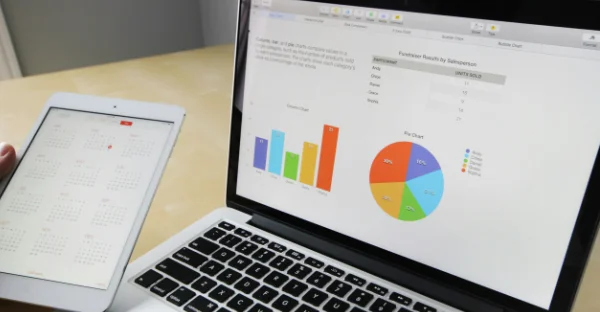
In recent years, data has become increasingly popular and relevant. From a field reserved for niche experts, it has, in a very short time, become accessible and useful for all of us in our daily lives.
Companies have quickly recognized its great potential by observing that, when modeled, visualized, and understood, the insights it provides for generating business and savings are enormous. Numbers, used appropriately, help foster productive and operational reflection.
The rapid development of technological tools in recent years has allowed us to improve data management and multiply the volume of analysis, resulting in more specific and useful information. However, it has been the improvement in data visualization that has allowed the benefits of advances in data analysis to reach different areas of society. In other words, data visualization has become an increasingly necessary tool to assign understandable meaning to the billions of rows of data generated every day.
Data visualization: the usefulness of visualizing data and figures
Data visualization arises precisely from the need to make data more relevant and “digestible” for the target audience. The reinterpretation and visualization of numbers using techniques and graphic elements facilitates access to data, translating its complexity and highlighting useful information.
Diagrams, classifications, curves, charts, organized in dashboards or static visualizations, clarify the power of data and facilitate the understanding of trends, outliers, and recurrences within them. This is how, in the end, data becomes actionable and usable; the end user understands and has a clearer view of what is happening in the company or the market in order to make decisions.
Data analysis and its visualization in the energy sector
In this sense, data visualization has also become indispensable in communication between companies and their customers or investors. They are increasingly informed through numbers, and as a result, companies aim to impress them with their performance metrics and annual reports.
It is hard to think of a professional field where having more understandable data is not beneficial. Public sector, finance, marketing, consumer goods, services, etc., not forgetting, of course, the field of energy, energy efficiency, and consumption optimization.
Savings and sustainability hand in hand with data visualization
Sustainability and savings are two areas where data visualization can help, especially when communicating how goals can be (or have been) achieved.
Since these are complex processes, often dense with numerical indicators, data visualization becomes a key tool to make both more tangible in the eyes of the end user.
EMS platforms and energy consumption maps
Monitoring systems and visualizations are very useful for identifying anomalous consumption peaks and acting accordingly, increasing sustainability and facilitating savings.
For its part, the Edison NEXT Energy Management System platforms collect, aggregate, and analyze data generated by an industrial plant, building, or property in real time, creating digital twins of the plants that are constantly updated thanks to sophisticated models combining digital technologies with energy sources, helping companies monitor, analyze, and optimize their energy flows and consumption.
The same solution is applied at a territorial level, such as a city, meaning it can generate maps representing the annual energy consumption of a locality. We are talking about an interactive visualization, where you can navigate through the city, obtaining from each area information such as its estimated total electricity and fuel consumption.
This solution from Edison Next, which works in the field of urban digitalization by developing “digital twins” of neighborhoods and cities, and simulating the results of possible scenarios, helps minimize waste, consumption, and emissions, as well as promote social, environmental, and economic sustainability.
Contact Us
Edison
Next
Information on the processing of your personal data in accordance with the provisions of the General Regulation (EU) 2016/679, on data protection (RGPD) and the L.O. 3/2018, on data protection and guarantee of digital rights (LOPDGDD).
Company Name: EDISON NEXT SPAIN, S.L.U.
Purpose: To respond to your queries and requests.
Legitimacy: Consent expressed by the sender when sending the data via the form provided for this sole purpose.
Rights: You may at any time exercise your right to access, rectification, deletion and portability of the personal data processed by Edison Next, as well as to oppose and limit such processing, by sending a signed request with proof of identity to privacidad@edison.es
Additional information: You can read more detailed information and other additional information in our privacy policy: www.edisonnext.es
